How SmokeScreen checks a claim before it becomes a story
A claim isn't news because it's trending. Here's the five-step check every SmokeScreen story has to pass — and the receipts box you'll find under all of them.
By SmokeScreen Desk · Oct 29, 2026
🎧 Listen to this article
Most agenda-driven coverage follows the same recipe: take one true fragment, cut the context, add a villain, and publish before anyone checks. The fragment being true is what makes it work — and what makes it hard to argue with. So SmokeScreen checks the whole dish, not just the fragment.
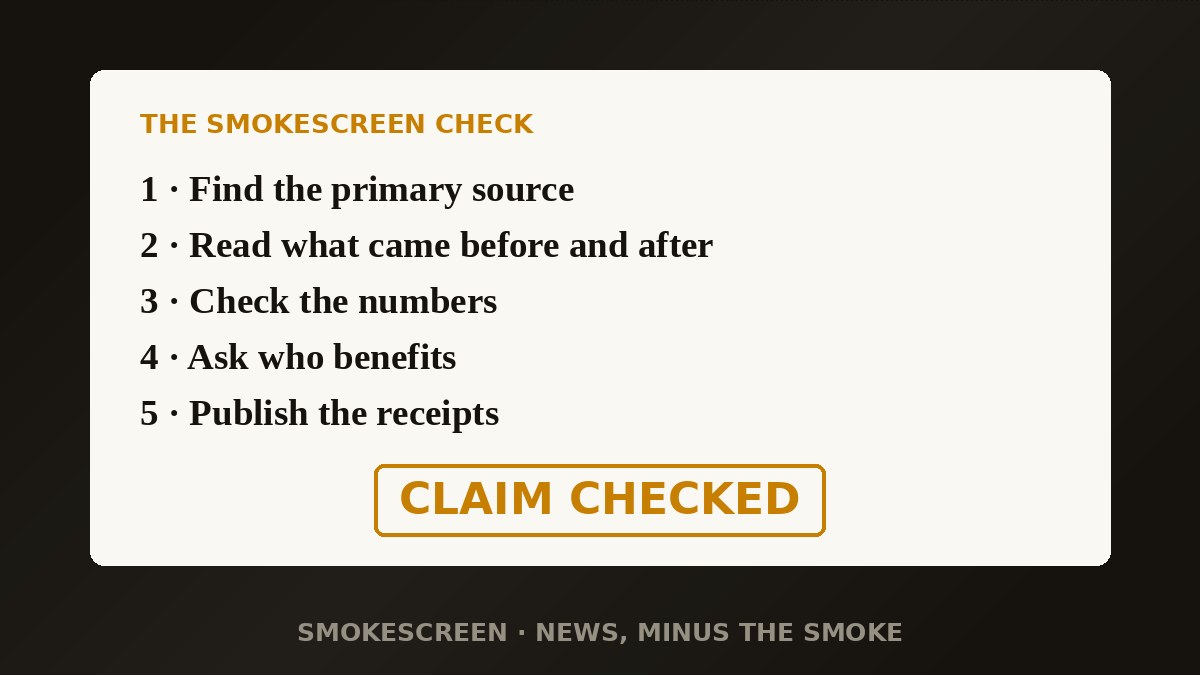
Step one: find the primary source. Not the clip of the clip — the full speech, the actual document, the raw data, the unedited video. Step two: read what came immediately before and after the quoted moment, because that's where agendas hide. Step three: check whether the numbers survive contact with the source they're credited to. Step four: look for who benefits from you believing this version, and say it out loud. Step five: publish the receipts with the story, so the check itself can be checked.
When a claim passes, we say what's true and how we know. When it fails, we show exactly where. When the evidence honestly isn't in yet, the story runs as DEVELOPING and the receipts box stays open. That's slower than the outrage cycle. It's also the point.
Think we got this one wrong?
Good. That's the job — yours and ours. Dispute the verdict, bring your own receipts, and if you're right, the correction runs on this story, in the open, with credit.
Challenge this verdict